Nossa Energia, Petrobras
How to improve SEO and reduce the number of channels for Petrobras content.
At Brivia, I connected information architecture, SEO, content and product design to turn Nossa Energia and Fatos e Dados into a clearer editorial hub, ready for publishing in Liferay.
Challenge
Defining the role of each channel
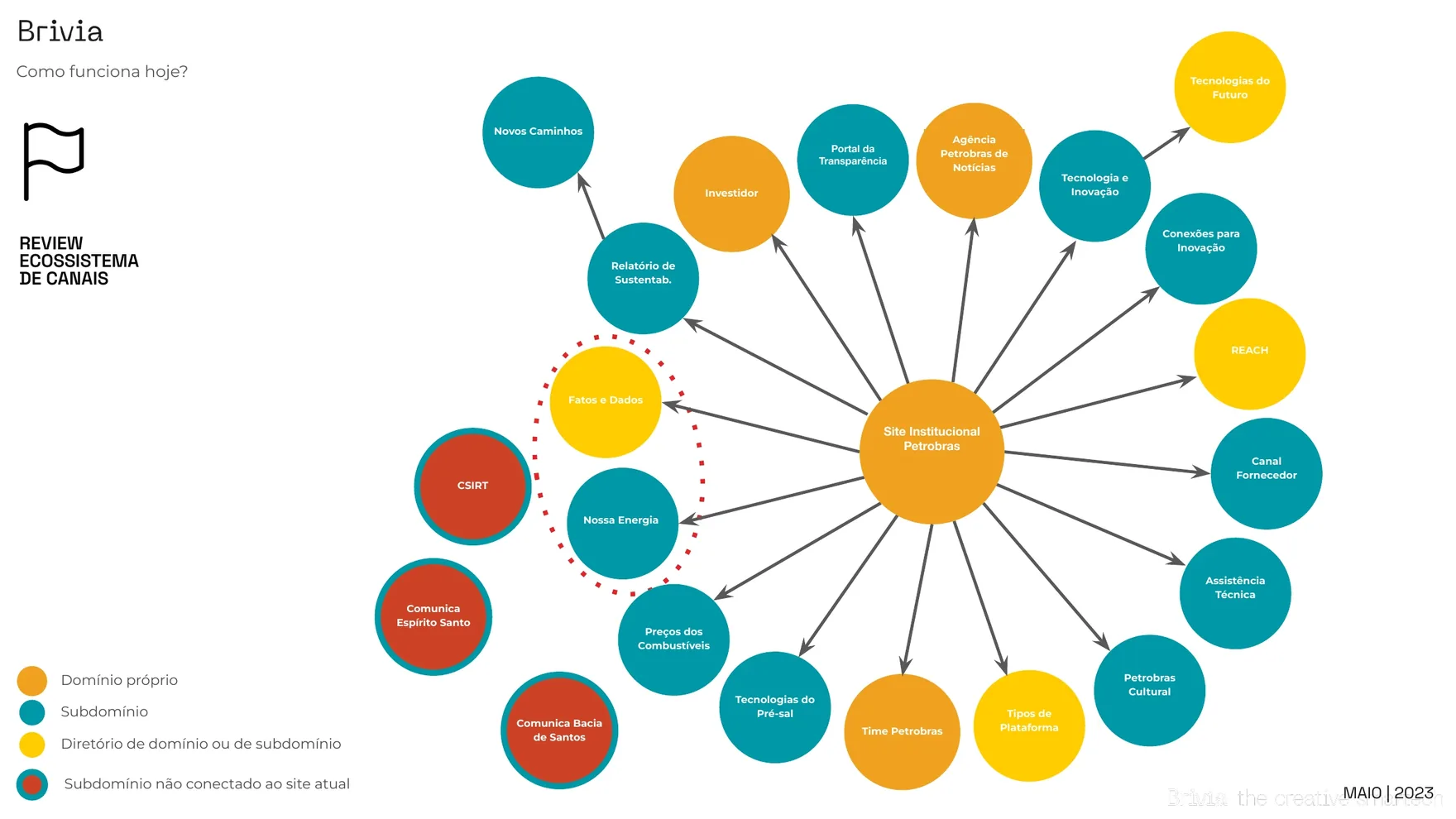
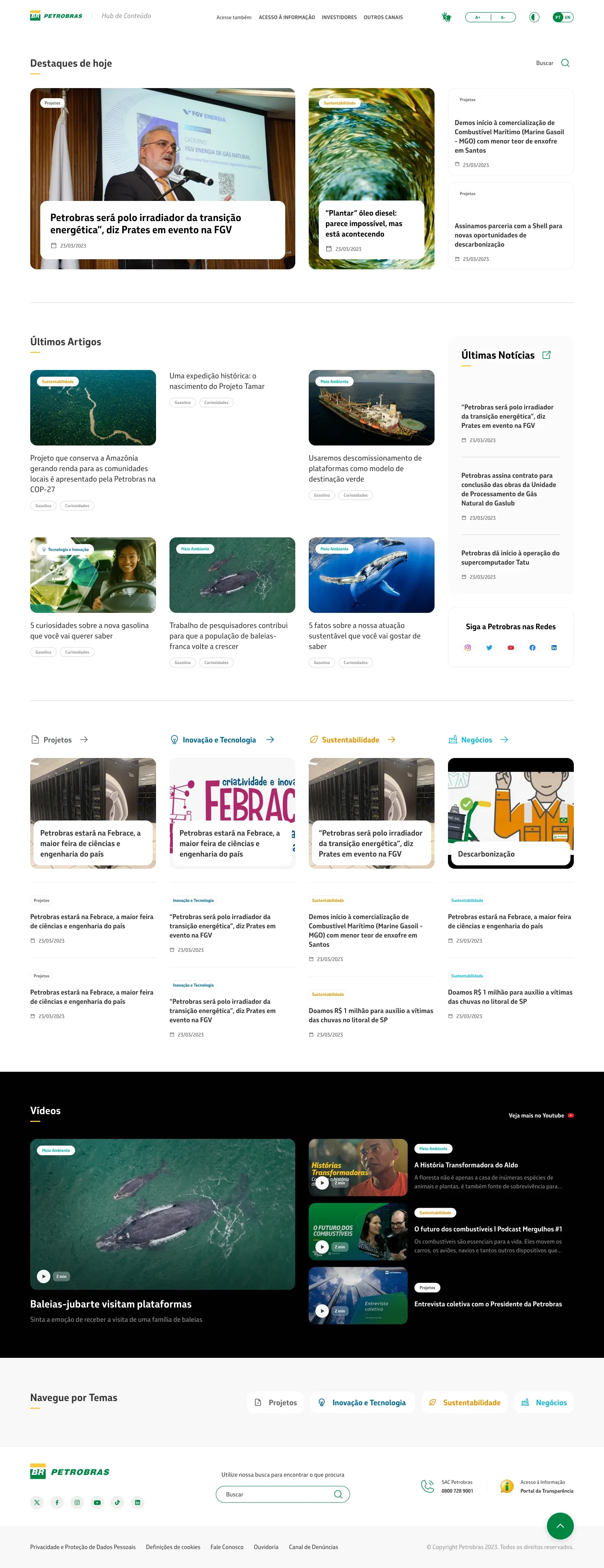
The old Nossa Energia published educational content about energy. Fatos e Dados gathered Petrobras corporate topics and initiatives. We needed to define each channel’s role and organize the paths to its content.
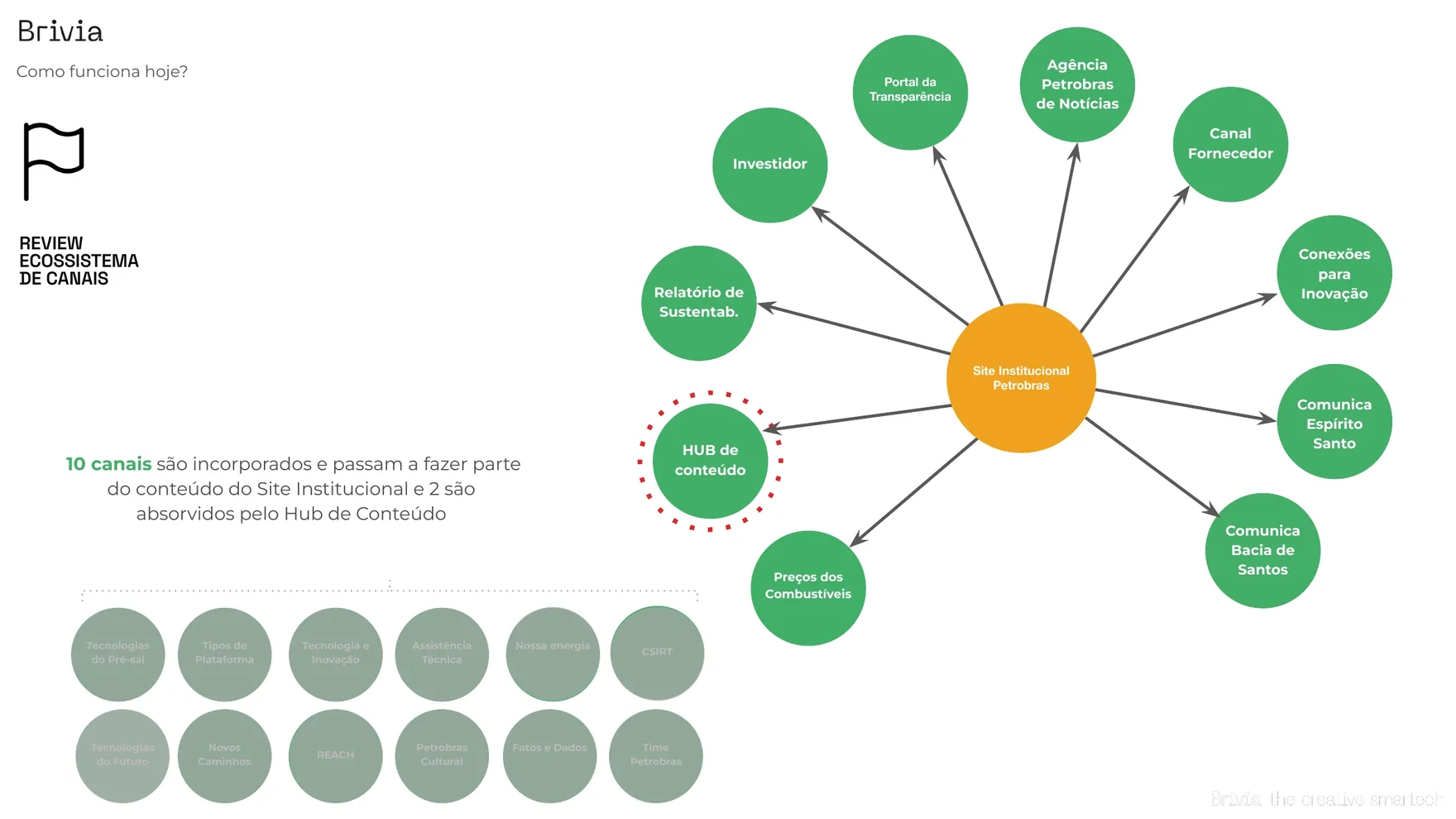
The plan brought these two channels into the hub’s scope and directed ten others to the corporate website. Agência Petrobras de Notícias remained a separate channel, connected to the hub.
Before
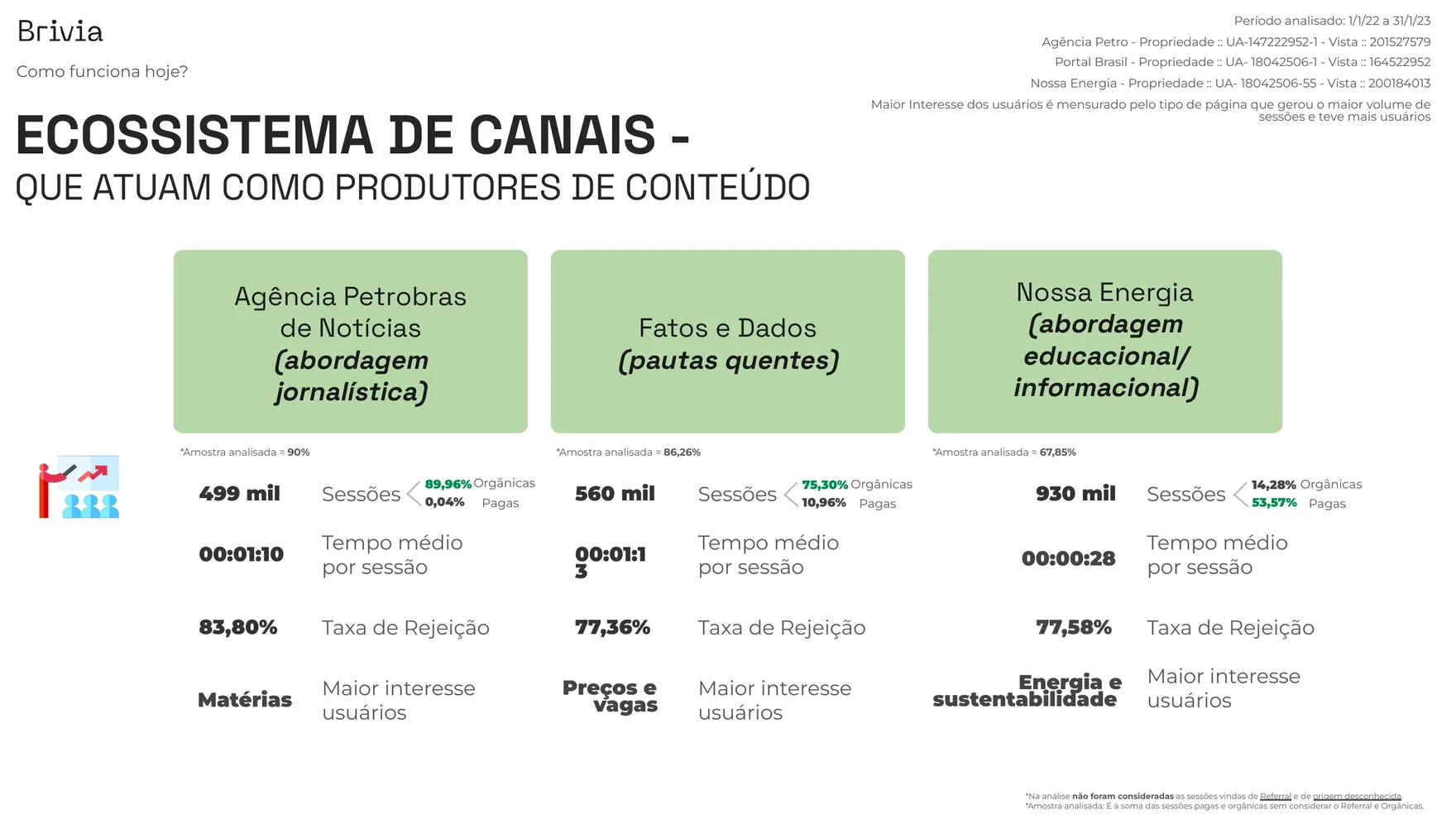
The audience and SEO diagnosis
The SEO diagnosis found a lack of internal links and poorly targeted related content. This data guided the team’s decisions about connections between pages and reading recommendations.
My contribution
Architecture, navigation and templates
I designed the navigation, content formats and platform templates. I used the Design System components and prepared the handoff for development.
I worked on the information architecture with the content manager and the tech lead responsible for Liferay. Product design, content, SEO and technology built the research, editorial strategy and naming together.
Decisions
Categories organize. Tags connect
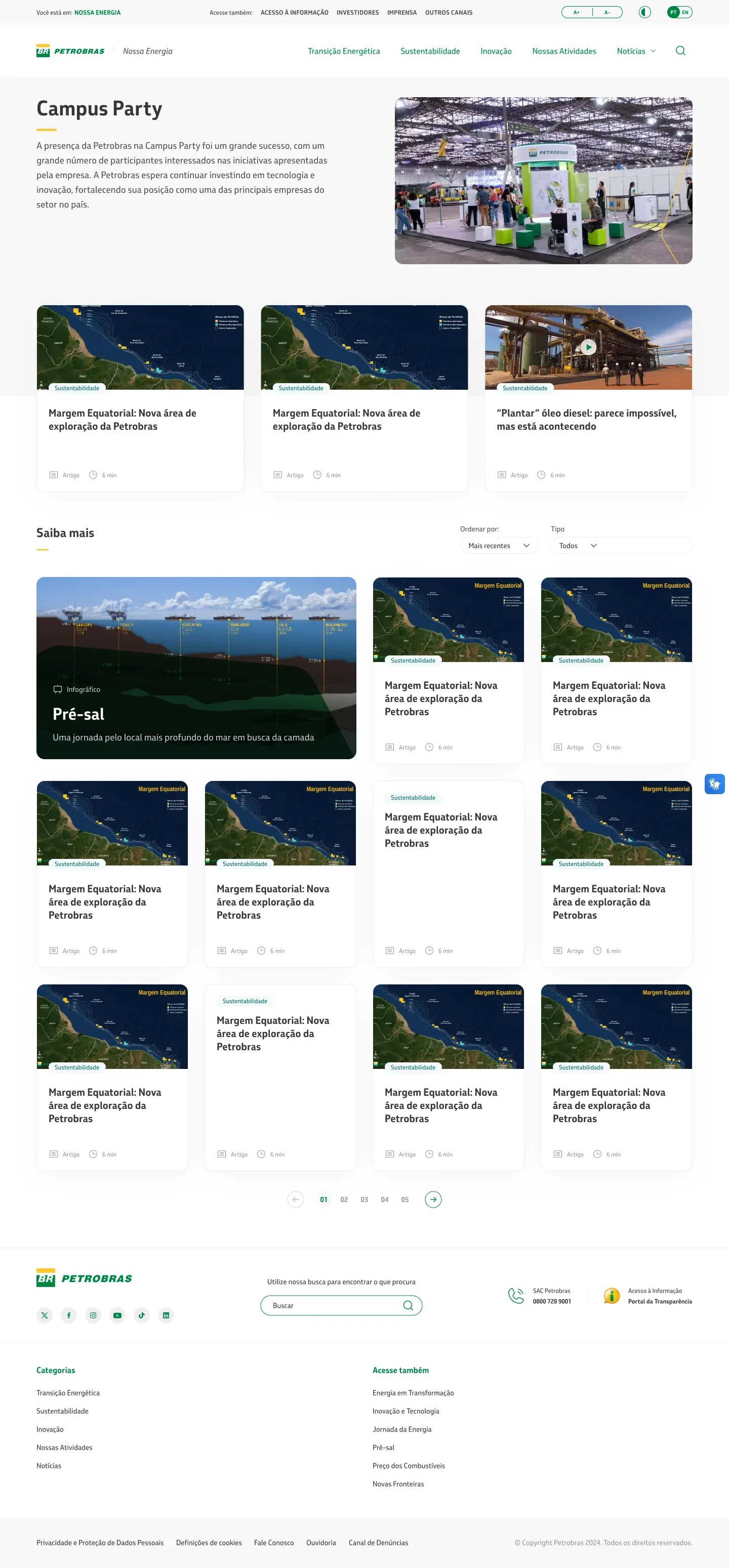
The proposal assigned a main category to each piece of content. Tags connected topics, formats and locations across categories, offering other paths to related articles.
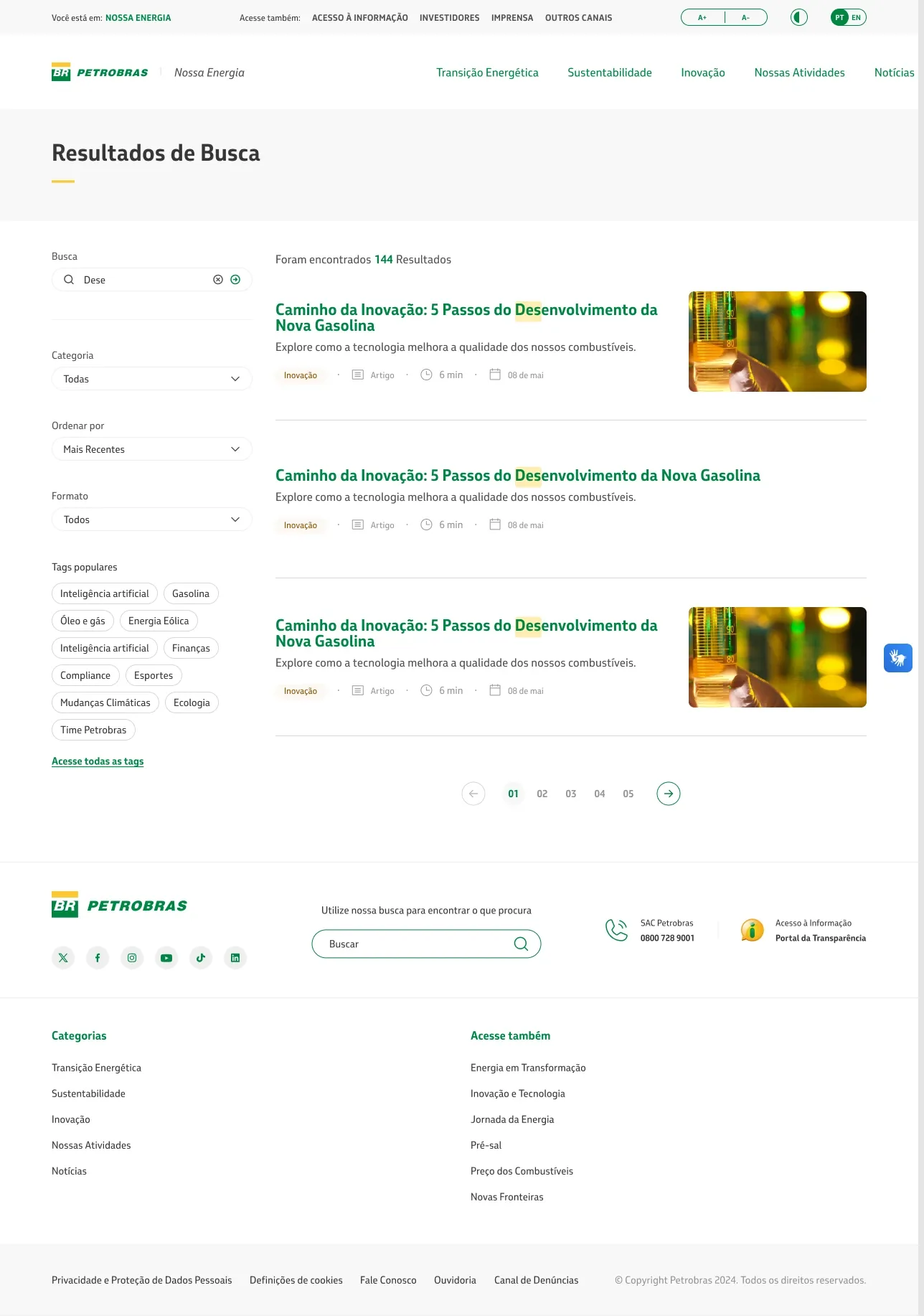
Topic pages would have an introduction and featured content. The plan also included related articles, breadcrumbs and search filters by topic and format.
Process
From channel map to handoff
The work followed four stages, from diagnosis to the development team.
- Diagnosis: map the channels and analyze audience, keywords and editorial references.
- Strategy: define the hub’s scope and how content is organized.
- Design: explore the page structure and develop the portal templates.
- Handoff: document the interface for the Liferay development team.
Solution
The editorial experience on desktop and mobile
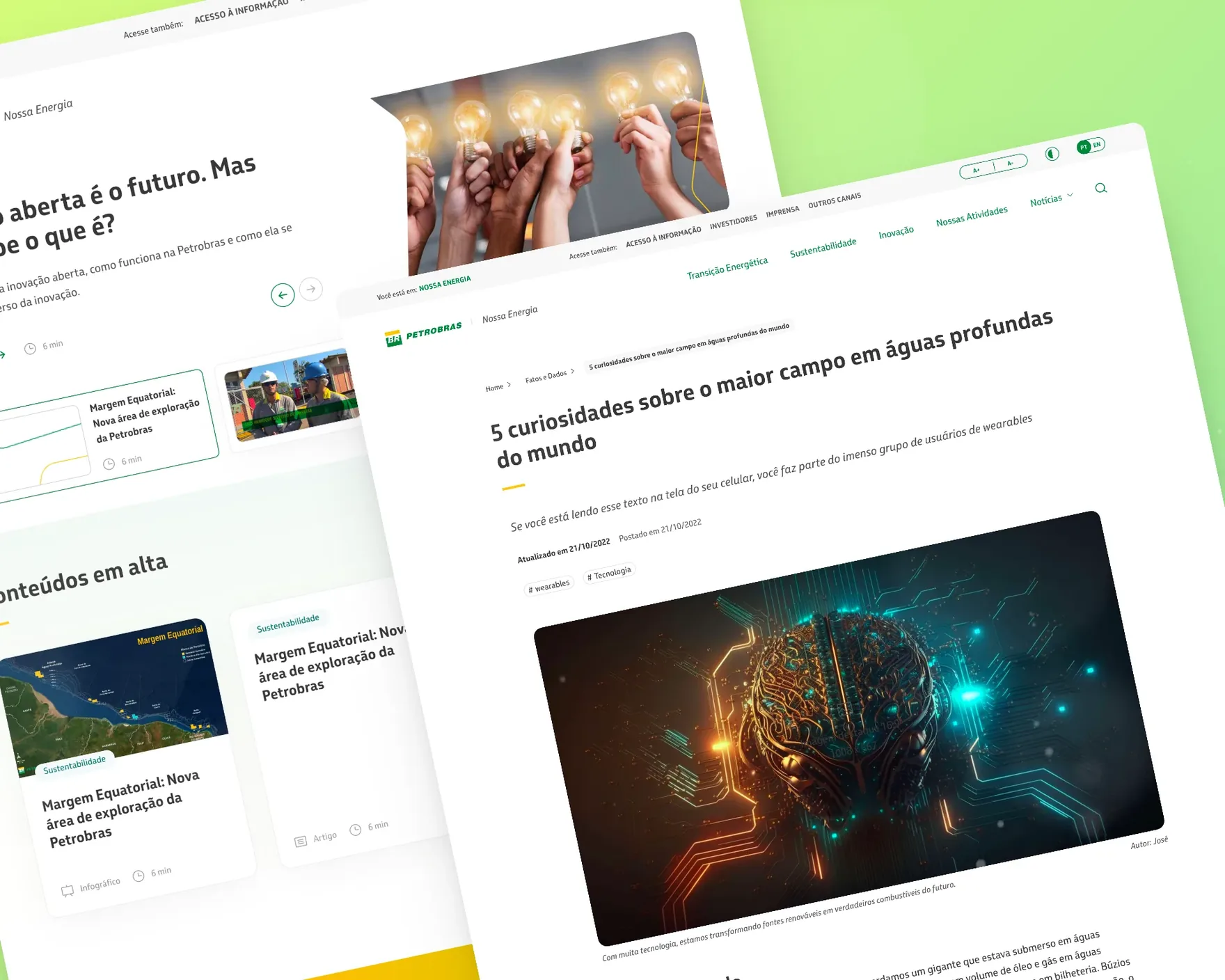
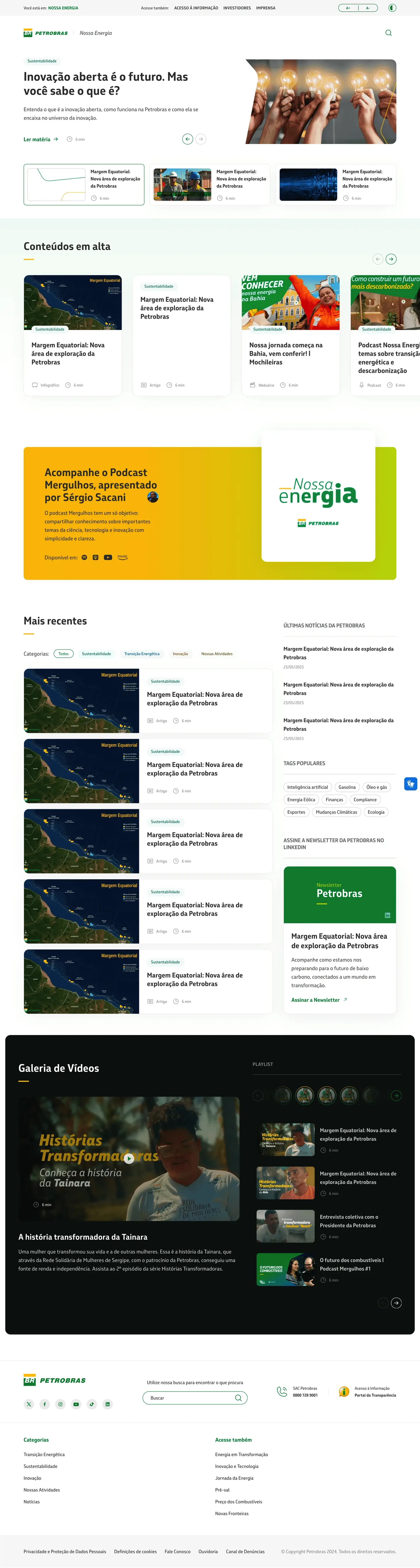
Highlights and content formats organized on the home page, with the same editorial hierarchy adapted to the vertical screen. Topic, search and reading templates complete the system.


Handoff
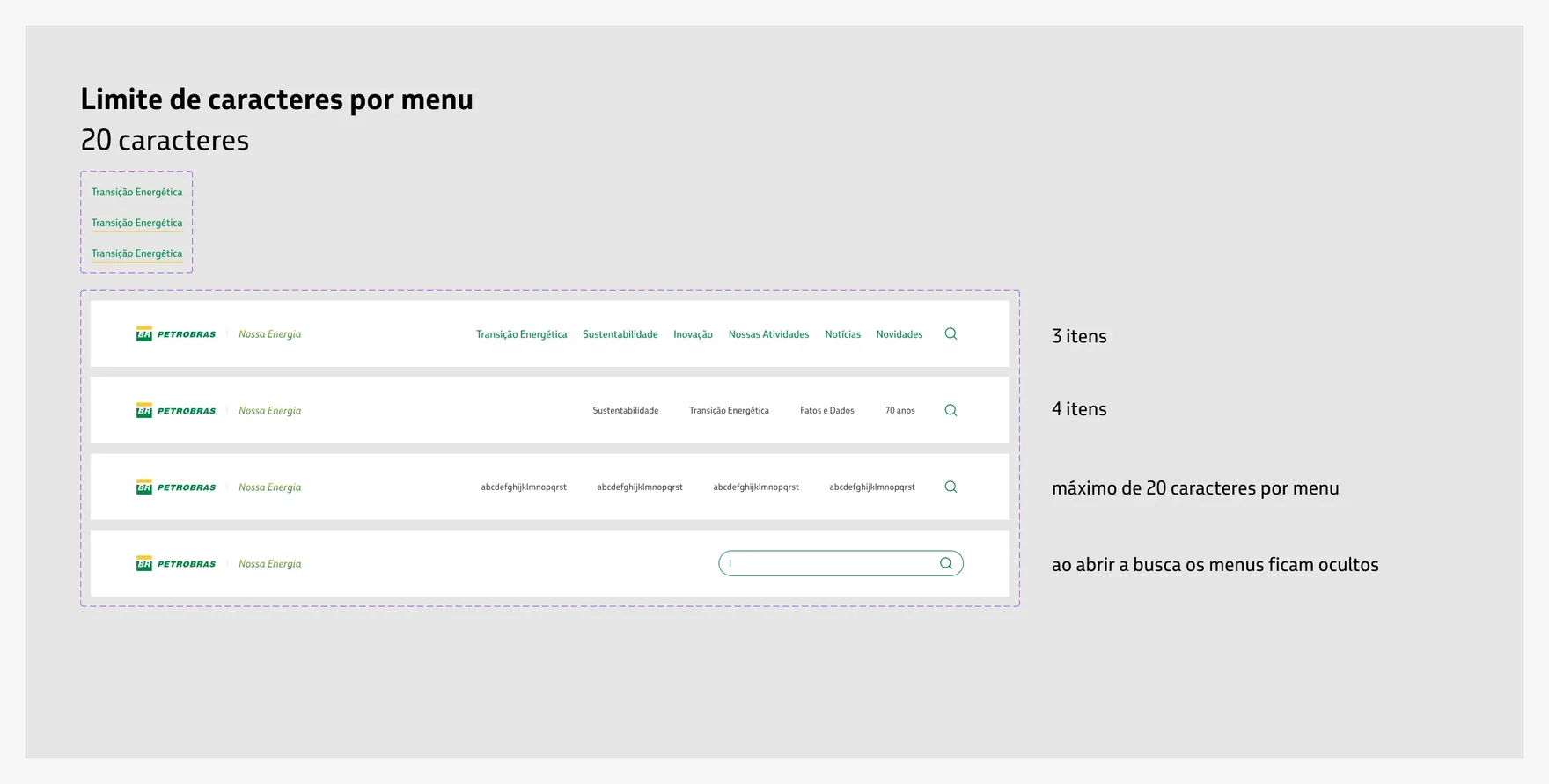
Navigation rules for implementation
The handoff documented how the portal used the Design System components, such as label character limits, menu variations and navigation hidden during search. I collaborated with the technical team responsible for the Liferay implementation.
Learnings
What I take from this project
Define the role of channels before designing pages. The channel map decided what should go into the hub and gave design a starting point.
Build with content and technology from the start. Discussing the architecture with content, SEO and tech leadership brought editorial and Liferay needs into the page design.
Adapt components to editorial needs. The templates and handoff specs recorded how each content format uses the Design System.